


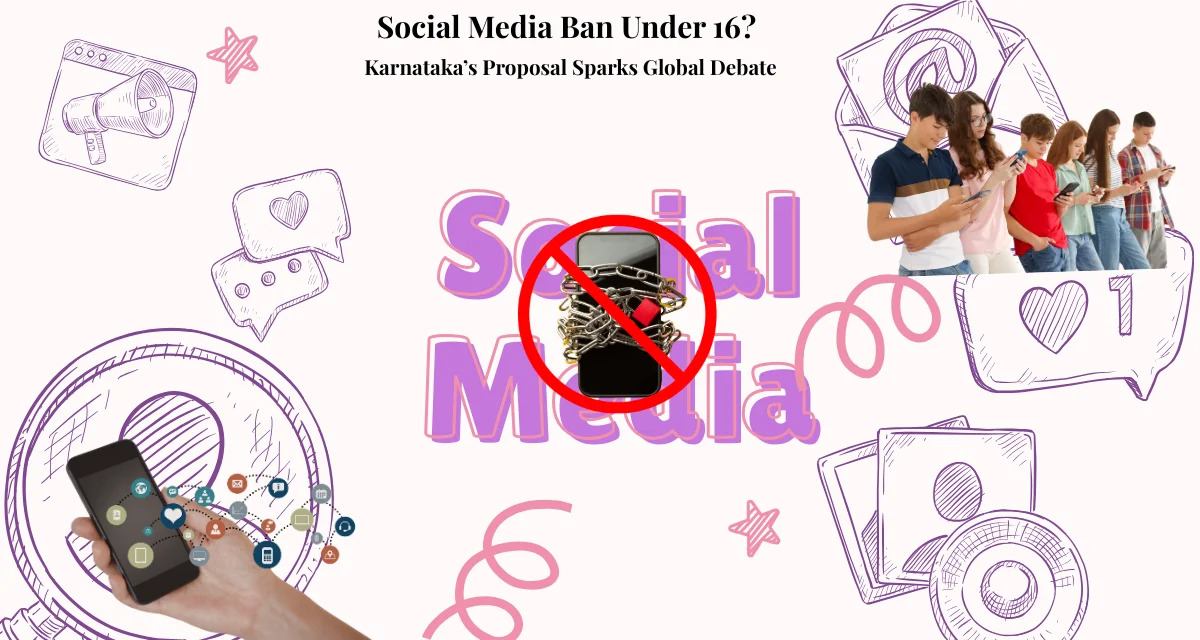
Is Karnataka Planning a Social Media Ban for Children Under 16?
In the Karnataka Budget 2026, the state government proposed an idea that immediately sparked debate across India, restricting social media access for children under the age of 16.
At the moment, this is only a proposal under discussion, not an implemented law. However, the announcement has triggered widespread conversations about teen mental health, digital safety, and the future of social media regulation in India.
Parents, educators, policymakers, and even digital platforms are now asking an important question:
Should teenagers have unrestricted access to social media platforms?
The Karnataka proposal reflects a growing global concern about how social media affects young users.
Why Are Governments Considering Social Media Restrictions for Teenagers?
The rapid rise of platforms like Instagram, Snapchat, TikTok, and YouTube has completely transformed how teenagers interact with the world.
For many young people today, social media is not just entertainment — it is where friendships form, trends emerge, and identities develop.
However, experts and health professionals have raised increasing concerns about the impact of social media on teenagers.
Some commonly discussed issues include:
- rising anxiety and depression among teenagers
- excessive screen time and sleep disruption
- addictive algorithm-driven content
- cyberbullying and online harassment
- exposure to harmful or inappropriate content
Because of these concerns, governments are beginning to explore social media age restrictions and digital safety regulations for minors.
The Karnataka proposal is part of this broader global shift.
What Does the Karnataka Social Media Ban Proposal Actually Mean?
The Karnataka government has indicated that it wants to study the possibility of restricting social media access for users below the age of 16.
While the exact framework is still under review, the proposal may involve measures such as:
- stronger age verification systems on social media platforms
- tighter account creation rules for minors
- improved parental control tools
- guidelines designed to protect young users from harmful digital exposure
If such a regulation is implemented in the future, it could become one of the first major social media age restriction policies in India.
Is This Only Happening in India? A Global Trend Is Emerging
The debate around social media regulation for minors is not limited to India.
Several countries are exploring ways to protect teenagers online.
For example:
- Australia has discussed stronger social media restrictions for younger users.
- European regulators are pushing for better age verification systems.
- In the United States, several states have proposed bills related to children’s online safety.
These discussions suggest that the world may be moving toward a more regulated digital environment for younger users.
The core challenge for governments is balancing digital freedom with online safety.
How Could a Social Media Ban Under 16 Affect Teenagers?
If stricter age restrictions are introduced in the future, the impact could extend beyond just platform access.
Teenagers today use social media for many reasons, including:
- communication with friends
- discovering new interests
- entertainment and creativity
- educational content
- community engagement
Supporters of restrictions argue that limiting access could help reduce screen addiction and mental health challenges.
However, critics say that banning access entirely could push teenagers toward less regulated digital spaces.
This is why policymakers are still studying the issue carefully before implementing any final regulation.
What Could This Mean for Social Media Platforms and Digital Marketing?
If age restrictions become stricter in the future, the impact could also reach the digital marketing ecosystem.
Brands and advertisers often target younger audiences through social media campaigns.
Possible changes could include:
Changes in Audience Targeting
Platforms may introduce stronger age verification systems, making it harder to directly target teenagers with advertisements.
Marketing Strategies May Shift Toward Parents
Companies selling products for teenagers may increasingly focus their marketing efforts on parents rather than minors.
Stricter Platform Policies
Social media platforms could introduce new policies to comply with evolving government regulations.
For digital marketers, these developments may gradually reshape how youth-focused campaigns are designed and delivered.
Can Governments Really Enforce Social Media Age Restrictions?
One of the biggest challenges with regulating social media is age verification.
Many teenagers already bypass platform age restrictions simply by entering a different birth date during registration.
Because of this, policymakers and technology companies may need to explore more advanced verification systems, while still respecting privacy and data protection laws.
Finding the right balance between safety, privacy, and technological feasibility will be essential.
A Turning Point in the Global Social Media Debate
Whether the Karnataka proposal becomes law or not, the conversation it has started reflects a larger global shift.
For years, social media platforms expanded rapidly with relatively limited regulation.
Now governments, educators, and parents are increasingly questioning how digital environments can be made safer and healthier for younger generations.
This debate is likely to continue as societies attempt to redefine how young people interact with digital technology.
Final Thoughts
The proposal to restrict social media access for users under 16 in Karnataka highlights a growing global debate about technology, youth safety, and digital responsibility.
While the final outcome of the proposal remains uncertain, it signals that governments are increasingly paying attention to the relationship between teenagers and social media platforms.
As digital ecosystems continue to evolve, discussions around social media regulation, online safety, and responsible platform design will likely become even more important.


Leave a Reply